The Quick Answer
If you're selling products online in New Zealand, Shopify is the right web builder. We say that as an agency that builds custom websites for a living. For e-commerce, Shopify's checkout, payments, inventory, and app ecosystem are years ahead of anything you could justify building yourself.
But here's what nobody selling you a Shopify theme mentions: the Shopify web builder gets you a store, not traffic. Out of the box, most Shopify stores barely register on Google. The store works. The ranking part is on you.
That gap is where we spend most of our time with e-commerce clients, and it's what this post is about.
What the Shopify Web Builder Does Well
Credit where it's due:
- Checkout that converts. Shopify's checkout is the most trusted and tested in the world. Building your own means fighting for conversions Shopify wins by default.
- It just runs. Hosting, security, updates, payments, GST handling. You never think about servers.
- Apps for everything. Reviews, subscriptions, shipping rates, currency switching. There's an app.
- You can edit it yourself. Products, prices, images, banners. No developer needed for day-to-day changes.
For a product business, that's the right foundation. We run several NZ client stores on Shopify and have never once regretted the platform choice.
Where Shopify Stores Plateau
Here's the pattern we see over and over: store launches, looks great, sells to people who already know the brand... and then organic traffic flatlines. The usual causes:
1. Thin product pages. The theme gives you a title, a price, and three sentences of description. Google has nothing to rank. Your product page is competing against retailers with 800 words of specs, FAQs, and buying guidance.
2. Empty collection pages. Collection pages are your biggest SEO asset on Shopify because they match how people search ("wing foil boards nz", not a specific SKU). Most themes render them as a grid of products with zero content. Google sees a page of images.
3. The blog nobody writes. Shopify ships with a blog. Almost nobody uses it. Yet it's where the "how to choose", "X vs Y", and "best for beginners" searches get answered, and those searchers are your next customers.
4. Template sameness. Ten thousand other stores run your theme. Nothing about the structure tells Google your store is the authority in its niche.
None of this is Shopify's fault. It's a builder, and it built you a store. Depth is a content problem, and content at the depth Google rewards is exactly what most business owners never have time to produce.
How We Fix It: Claude in the Back End
This is where our approach differs from a standard Shopify agency. We use Claude, the AI that powers our whole development workflow, inside the store's back end to produce the depth Google rewards at a speed and cost that used to be impossible. The strategy is ours; the heavy lifting is AI's.
In practice, on a Shopify store that means:
- Product descriptions at scale. Keyword-mapped, spec-rich, genuinely useful descriptions across the entire catalogue, written to answer what buyers actually search. A 200-product catalogue used to be a $15k copywriting project. It isn't anymore.
- Collection pages with real content. Buying guides, comparison content, and FAQs on the collection pages themselves, so the pages that match search demand actually deserve to rank for it.
- Structured data throughout. Product, offer, review, and FAQ schema so Google shows prices, stock, and stars in results, and AI assistants can read your catalogue cleanly.
- Blog clusters that match the buying journey. The "how to choose" and "which one is right for me" content that catches customers a month before they're ready to buy.
- Internal linking and clean architecture. Collections, products, and posts wired together so authority flows to the pages that make money.
Same playbook we used to take Airmax from 63 to 396 monthly Google clicks in two months, applied inside Shopify instead of a custom build.
A Real Store: PPC Foiling

PPC Foiling is a Kiwi wing foiling brand (good enough that America's Cup skipper Jimmy Spithill invested). Their Shopify store is the heart of the direct-to-consumer business, and it's a working example of the platform used properly:
- The store handles global D2C sales while a dealer portal serves the B2B side
- Google Merchant Center product feeds put the catalogue directly into Google Shopping
- Klaviyo email automation drives retention and repeat purchase
- Meta and Google Ads feed the top of the funnel while the store's content does the converting
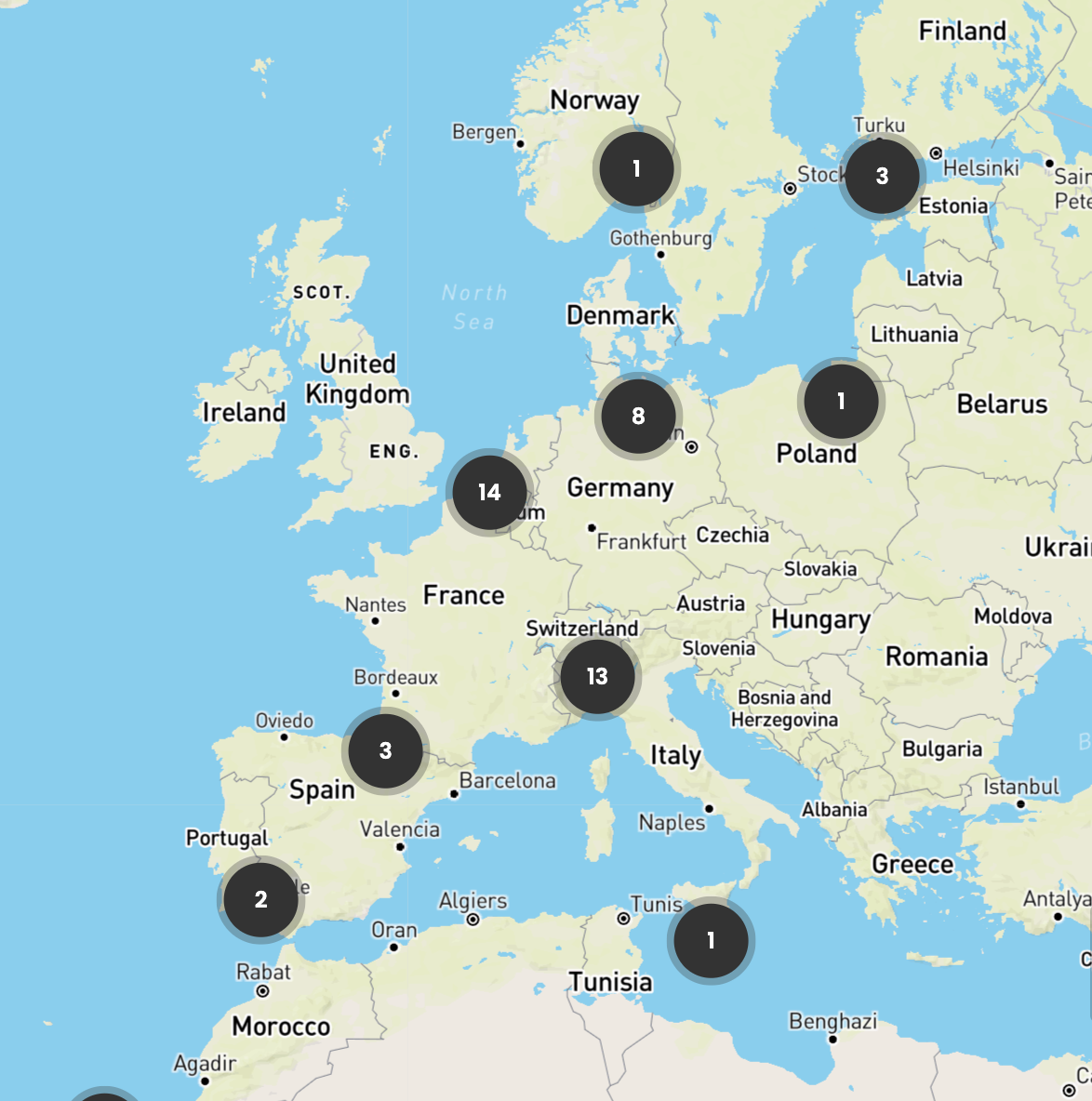
Since 2024 the brand has grown from 7 dealers to roughly 95 across North America and Europe, with the Shopify store performing strongly alongside that wholesale growth. The platform was never the constraint. The system around it was what needed building.
When Shopify Is the Wrong Choice
Honesty section. Don't use Shopify if:
- You don't sell products. Service businesses (trades, professional services, consultants) pay Shopify's monthly fee for an e-commerce engine they never use, and fight the platform's product-shaped structure. A custom site ranks better and costs less to run.
- Content is your growth engine. If winning means 50+ pages of deep local and service content, a custom build gives us total control over structure, speed, and schema. That control is why Airmax's site went to 29x search visibility.
- You're trying to save money with the free trial. A builder subscription is never really free. More on that in our full website builder comparison.
The Bottom Line
Shopify is the best web builder for NZ product businesses, and the store it builds you is the start, not the finish. Ranking is a depth-of-content game, and that's now a game a small NZ brand can afford to win.
If you've got a Shopify store that looks great and gets no Google traffic, that's exactly the problem we like solving. Get in touch and we'll tell you honestly what it would take, or see our e-commerce web design pricing. Ecommerce builds start from $4,000, and there are no lock-in contracts on anything we do.