The Short Version
Every website builder makes the same promise: a professional site, no developer needed, from $20-something a month. And for a business card site, most of them deliver.
But if you want your website to bring you customers (rank on Google, show up in AI answers, turn searches into enquiries), the builder question changes completely. Ranking is a depth and structure game, and it's exactly where builders hit their ceilings.
Here's the honest comparison, including the option most of these lists leave out: a custom-built site at a price that's now genuinely comparable, because AI changed the economics of building them.
The Builders Compared
| Builder | Real cost | Easiest for | SEO ceiling | You own it? |
|---|---|---|---|---|
| Wix | ~$300-600/yr | Absolute beginners | Low-medium | No |
| Squarespace | ~$400-700/yr | Design-conscious DIYers | Low-medium | No |
| Shopify | ~$700-2,000+/yr | Online stores | Medium | No |
| WordPress | ~$300-1,500/yr + upkeep | Tinkerers, bloggers | High (with work) | Mostly |
| Webflow | ~$400-800/yr | Designers | Medium-high | No |
| Free builders | "Free" | Testing an idea | Very low | No |
| Custom (our approach) | From $2,000 once | Businesses that want traffic | None | Yes, fully |
Wix
The easiest on-ramp there is, and fine for a simple presence. The trade-offs: template sites that look like template sites, middling page speed, and an SEO setup that covers the basics and stops. Ranking a Wix site against purpose-built competition is pushing uphill.
Squarespace
The best-looking templates and the most pleasant editor. The same structural ceilings as Wix, with a design polish tax. We wrote a full piece on the real reason people choose Squarespace, because the instinct behind it (being able to edit your own site) is exactly right, and you can get it without the ceiling.
Shopify
If you sell products online, this is the one. Best checkout in the business, apps for everything. But the builder gets you a store, not traffic: out of the box, most Shopify stores barely register on Google. We covered where Shopify shines and how we make stores rank separately.
WordPress
The most capable of the DIY options and the only one where you mostly own your site. It's also the one that quietly becomes a part-time job: plugins, updates, security, speed. Good WordPress is real work. Neglected WordPress is the "basic site that barely registered on Google" we replace most often.
Webflow
Genuinely powerful, beautiful output, and the steepest learning curve of the bunch. Better SEO control than the others. If you're a designer, great. If you're a plumber, you'll pay someone to drive it, which defeats the purpose of a builder.
The Free Site Builders
Wix Free, Google Sites, Carrd and friends. Real uses: testing an idea, a hobby page, a one-event site. For a business, "free" costs you the builder's ads on your site, a domain you don't control, and a look that tells customers you weren't sure about this business yet. If revenue depends on it, free is the most expensive option on this list.
The Option These Lists Leave Out
Here's what changed in the last two years: custom websites stopped being expensive.
The reason builders won was price. A custom site meant $10,000+ and six weeks, so paying $40 a month for a template made sense. That math is gone. We build fully custom sites from $2,000, a similar all-in cost to a couple of years of builder subscriptions, except it's once, and you own everything at the end.
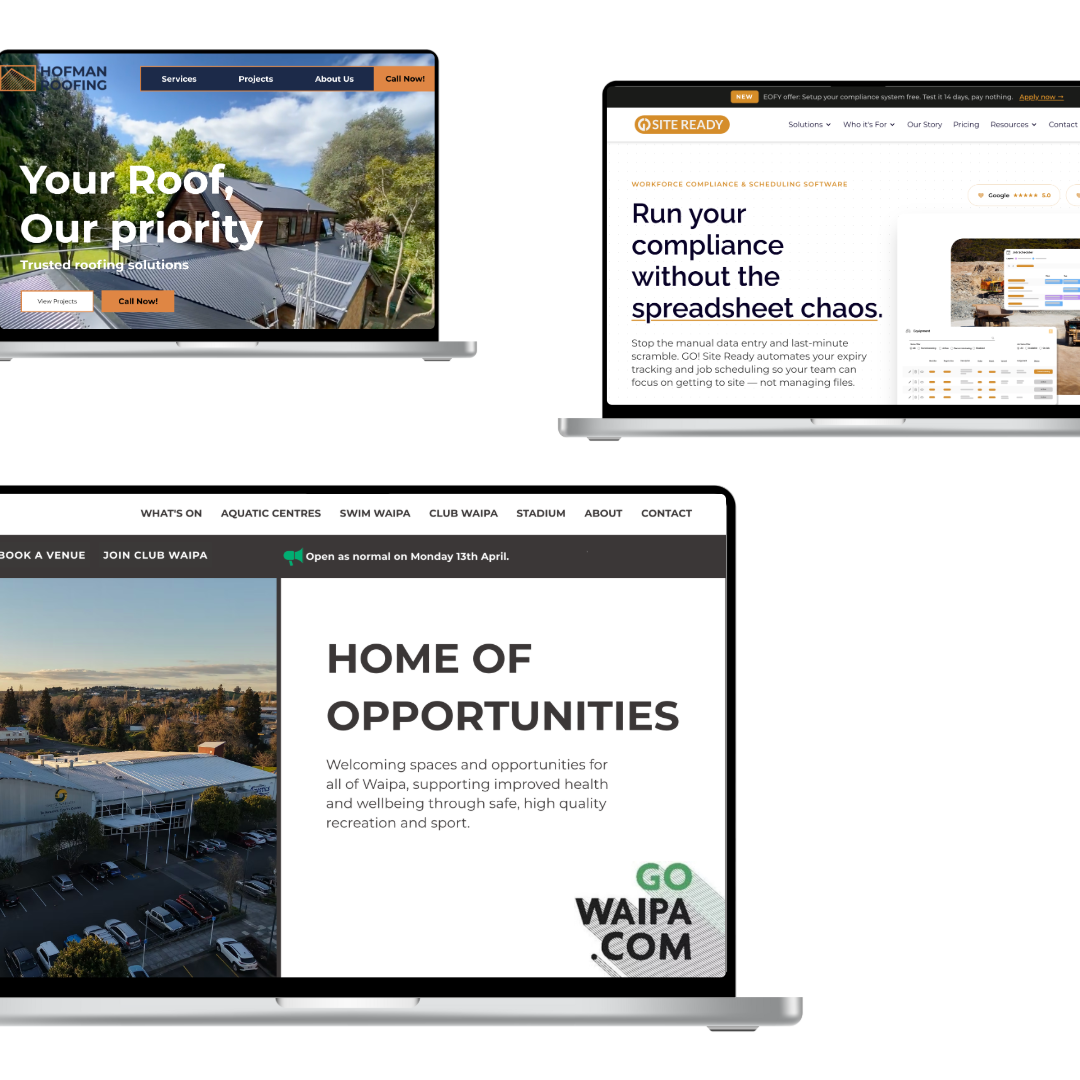
What made the difference is AI in our build process. We use Claude across development and content, which means the deep, search-engineered sites that used to take a team weeks (50 to 100 pages, every service and location covered, structured data throughout, sub-second load times) now take days. We direct the strategy; AI does the heavy lifting. We built our own site the same way.
Why does depth matter that much? Because it's the difference between a website and a website that ranks:
- Airmax had a basic WordPress site that never sent a single lead. We replaced it with a 98-page custom build. Two months later: search visibility up 29x, Google clicks up from 63 to 396 a month, organic users up 630%, and the owner's phone went from 2 calls a day to 10. His words: "Before you did what you did I'd be lucky to get 2 calls a day. Now I'm surprised if I don't get 10."
- Our own clients' sites have ranked on page one of Google within 2 to 3 weeks of launch, because every page goes live keyword-researched, structured, and indexed on day one.
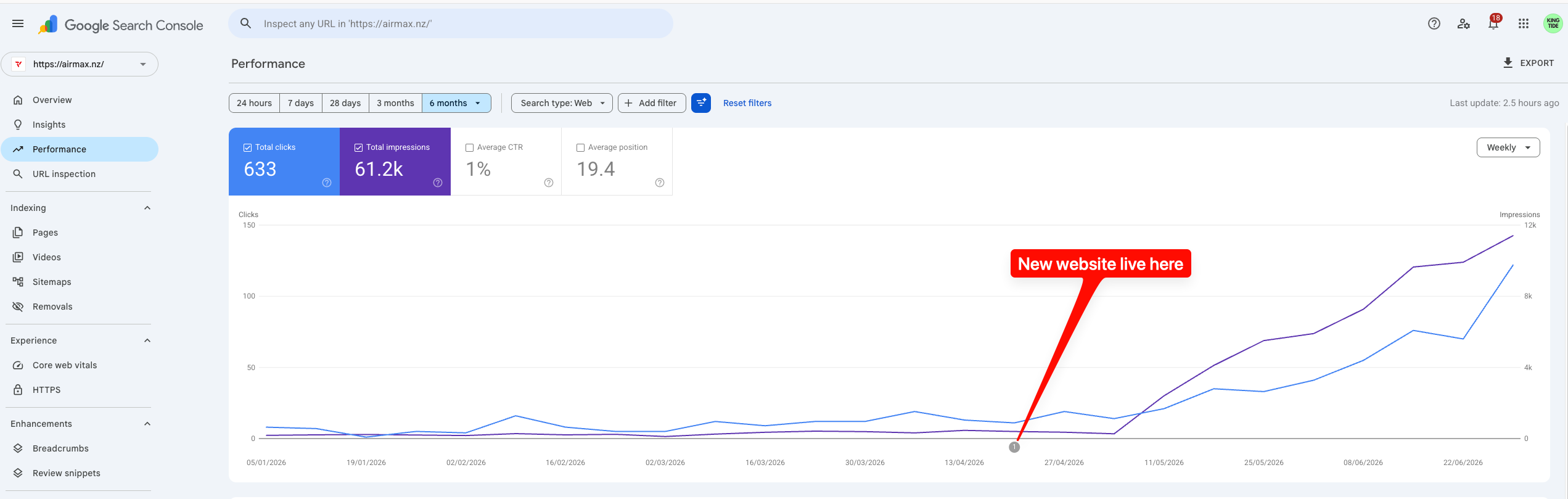
No builder template produces that, not because the builders are bad, but because ranking takes structural control and content depth that drag-and-drop tools aren't built to deliver.
And the independence that makes builders attractive? You keep it. Every build comes with hands-on training and documentation so you can edit your own site confidently after handover: that's the deal we described here. You own the code, the content, and the domain. No subscription, no lock-in contracts, no hostage fees.
So Which Should You Choose?
Our honest routing:
- Testing an idea, might fold in six months → free builder or Wix. Spend nothing until it's real.
- Business card site, all work from referrals, Google doesn't matter → Squarespace. It'll look good and you'll manage it fine.
- Online store → Shopify, and budget for the content work that makes it rank.
- You enjoy tinkering and have the hours → WordPress, with your eyes open about upkeep.
- You want the website to bring you customers → custom build. The price argument for settling is gone, and the traffic difference is the whole game. If most of your revenue starts with someone searching Google, this is your category.
If you're in that last group, see how we build them or get in touch. We'll tell you honestly which category you're in, including if the answer is "you're fine on Squarespace."